Victor J. Stenger (1935–2014) was a retired elementary particle physicist. He received a Bachelor of Science degree in electrical engineering from Newark College of Engineering and later a Master of Science degree and PhD in physics from UCLA.
He then took a position on the faculty of the University of Hawaii, retiring to Colorado in 2000. He held the position of emeritus professor of physics at the University of Hawaii and adjunct professor of philosophy at the University of Colorado. Stenger also held visiting positions on the faculties of the University of Heidelberg in Germany and Oxford University, and was a visiting researcher at Rutherford Laboratory in England, the National Nuclear Physics Laboratory in Frascati, Italy, and the University of Florence in Italy.
Over his research career, Stenger contributed to establishing the properties of strange particles, quarks, gluons, and neutrinos, and helped pioneer the emerging fields of very high-energy gamma-ray and neutrino astronomy. In his last project before retiring, he collaborated on the underground experiment in Japan that in 1998 showed for the first time that the neutrino has mass. The Japanese leader of the project shared the 2002 Nobel Prize in physics for that work.
He was the author of thirteen books including the 2007 New York Times bestseller God: The Failed Hypothesis: How Science Shows That God Does Not Exist. His final book was God and the Multiverse: Humanity’s Expanding View of the Cosmos (2014). Victor Stenger died on August 25, 2014, at the age of 79.
Episodes




Topic Series










Curated Playlists

Books
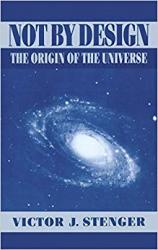
Not by Design Buy the Book
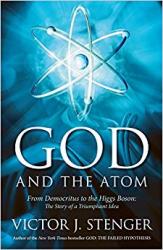
God and the Atom Buy the Book
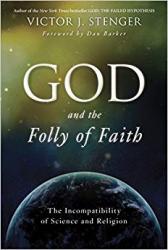
God and the Folly of Faith: The Incompatibility of Science and Religion Buy the Book
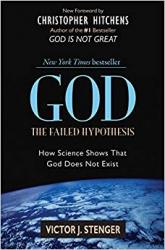
God: The Failed Hypothesis. How Science Shows That God Does Not Exist Buy the Book
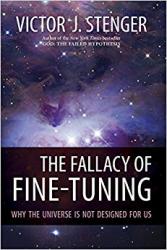
The Fallacy of Fine-Tuning: Why the Universe Is Not Designed for Us Buy the Book
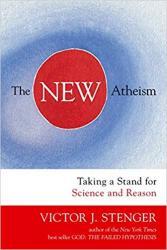
The New Atheism: Taking a Stand for Science and Reason Buy the Book
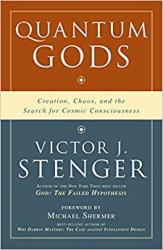
Quantum Gods: Creation, Chaos, and the Search for Cosmic Consciousness Buy the Book
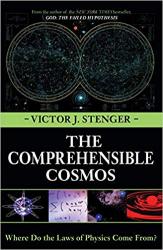
The Comprehensible Cosmos: Where Do the Laws of Physics Come From? Buy the Book

Has Science Found God? The Latest Results in the Search for Purpose in the Universe Buy the Book
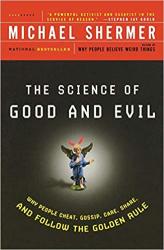
The Science of Good and Evil (Holt Paperback) Buy the Book
The Unconscious Quantum Buy the Book
